
DECK CARE · CARPENTRY ADVICE
Deck boards or framing: what needs repair?
We assess the boards, joists, bearers and posts together before recommending local board replacement or support repairs. Suitable retained framing can allow reboarding, while damaged connections need work first. Cleaning and oiling are planned after those condition checks.
We can help with:
Begin with the surface and the support system
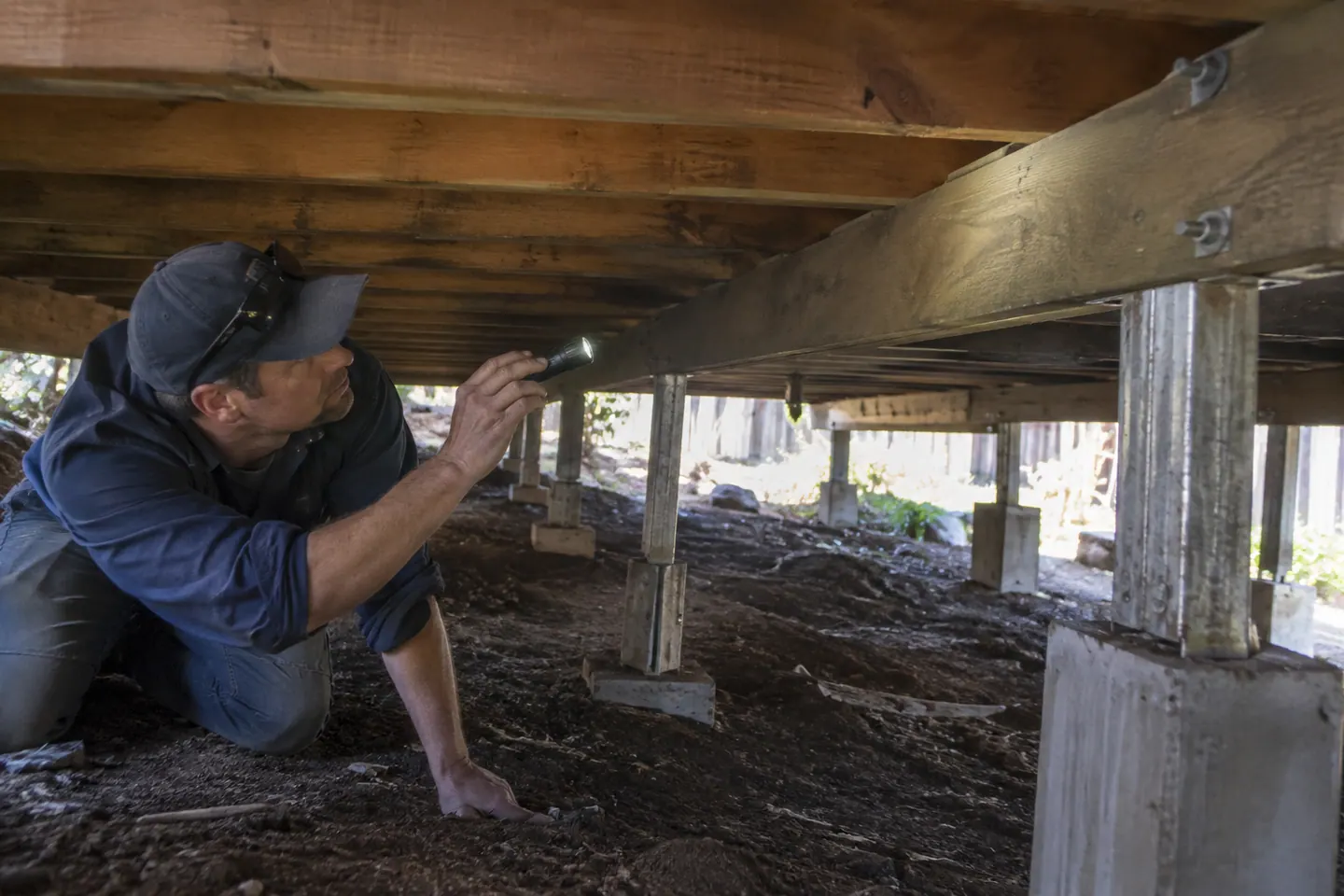
The first distinction is between the walking surface and the structure carrying it. A board may split or wear while some supports remain usable, but damage can also continue into the joist below. Inspecting the accessible boards, joists, bearers, posts and connections establishes whether the job is local board replacement, defined support repairs or a wider rebuild. The number of unattractive boards alone cannot answer that question.
We inspect the damaged boards and their supports to distinguish surface wear from timber or connection faults. Softness or movement can indicate a problem that cleaning will not resolve. Unstable areas remain out of use while we establish the required board and support repairs.
Why a proud nail or loose screw needs context
A fixing can move because of the board, the fastener, the timber holding it or movement elsewhere in the assembly. Hammering it down may hide the symptom without establishing that it will hold. Several fixings lifting in one line give different information from one damaged board end. Describe that pattern and any earlier repair rather than adding more fixings before the visit.
We check each affected board and the timber holding its fixings, with concealed access agreed where needed. The proposal specifies retained members, replacement parts and any structural checks. Sound mounting material matters because a new screw alone may not hold in deteriorated timber.
When a local board replacement is worth considering
Replacing a defined group of boards can preserve useful material where the surrounding surface and assessed supports remain suitable. The choice needs the board dimensions, the position of joins, fixing access and the condition at ends. A narrow damaged patch beside a stair or building junction may involve more detail than the same board area in an open middle section.
We compare replacement timber with the existing dimensions, colour and texture and agree a practical match with you. Preparation and coating of retained boards are specified separately. Differences can remain beside weathered timber, so the intended finished area is clear before supply.
When support findings change the job
We inspect damaged joists, bearers, posts and house connections before laying replacement boards. We identify sound timber to retain and plan support and connection repairs first, incorporating any required structural input. This lets us address the original fault before closing the deck surface.
Once the condition is established, we explain local board repair, defined framing work or a wider rebuild, including retained timber and access. The repair-or-rebuild guide outlines these alternatives. Appearance and age alone do not establish which parts are suitable to keep.
Put sanding and oiling in the right place
In the Melba project completed in May 2025, Ellis repaired raised and distorted deck boards before cleaning, preparing the surface and applying Cabot’s oil-based decking oil. Your care plan follows the selected product and the deck’s exposure and condition.
We specify whether preparation and coating cover replacement boards or the wider deck, with the existing finish considered for compatibility. Our guide to timber deck maintenance explains surface care. Repairs and coating are separately described in the quote; enquiries can begin through our enquiry form or brian@elliservices.com.au.
Arrange a deck inspection with our team
We assess the affected area, stairs, rails and building junctions, and review any known leaks or earlier repairs. The visit establishes access to boards and supports and the limits of the repair. Existing records or photographs are useful references, without being a prerequisite for assessment.
For deck repairs and board replacement, our written scope identifies boards, supports, fixings, removal, disposal, access and finish. Additional findings and revised work are agreed before proceeding. This connects the price to the assessed structure and the complete repair.
Deck care: common questions
Can good-looking boards hide a damaged frame?
Yes. Ellis checks the deck boards, concealed supports where accessible, and connections together to identify the repair needed.
Does replacing boards include sanding and oiling?
Only when it is included in the quote. We identify the area, preparation and coating, and the treatment of retained and replacement boards.
When can deck boards be replaced without rebuilding the frame?
Board-only replacement is specified after the supporting joists, bearers, posts and connections are assessed as suitable for retention. Where supports need repair, that work is included before the new boards are fitted.
Why do deck fixings work loose?
Timber movement, deteriorated fixing material or unsuitable or damaged connections can loosen deck fixings. We check the board and supporting member together rather than simply adding another screw.
Materials, maintenance and the quote
Read timber deck maintenance and repair boundaries · Compare the material decision before changing boards See our Melba deck repair and care project for a photographed example of board repairs followed by cleaning and oiling.
RELATED SERVICE
Deck Repairs & Board Replacement
Deck repairs and board replacement for existing timber decks. Walking boards, fixings and supporting framing are assessed separately before choosing the repair extent.
Explore Canberra deck repairs & restoration ↗