
DOORS & WINDOWS · CARPENTRY ADVICE
Why do timber doors stick in a Canberra summer?
A front door that scrapes on summer afternoons, a dropped internal door and a latch that misses its strike can need different repairs. We check the timber, frame and hinge support before planing. The aim is a door that opens, closes and latches with usable clearance, with any worked timber protected against renewed exposure.
We can help with:
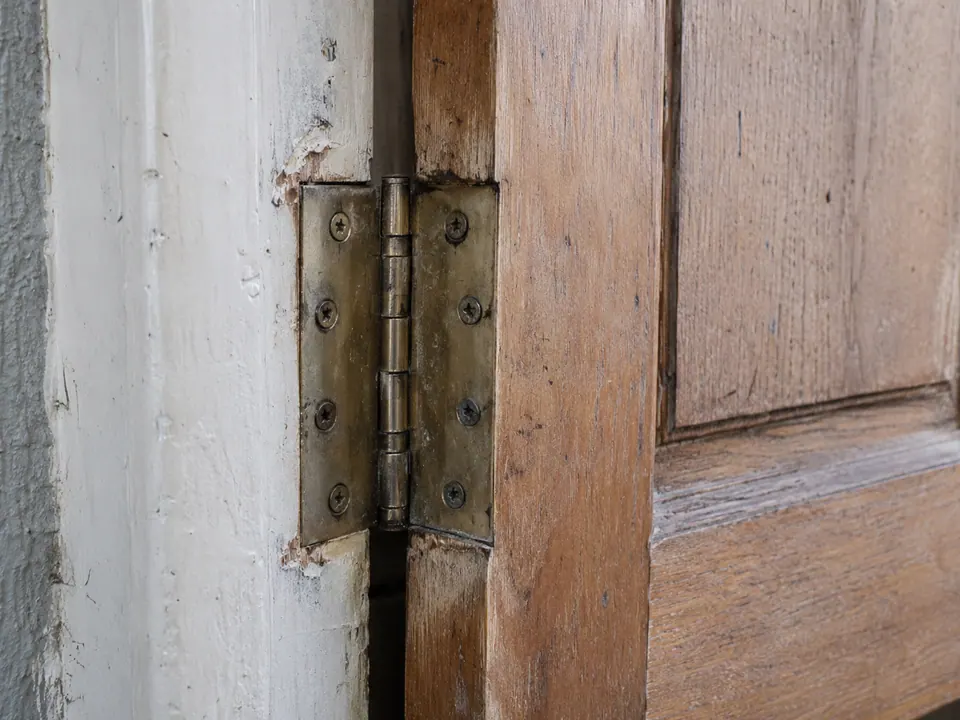
December exposure: warmth, cooler nights and an exposed entrance
Canberra’s summer begins in December. BOM’s Canberra Airport record for 2008–2026 lists December mean maximum and minimum temperatures of 27.4°C and 11.9°C. An exposed front door can face direct sun as well as rain and changing humidity. We check that actual exposure and the timing of the fault rather than diagnose a particular door from the climate averages.
Heat, UV and timber moisture are different considerations. Sun exposure can affect the door’s surface conditions and its protective finish, while timber can change dimensions as it gains or loses moisture. We compare the exposed face, lower edge, coating and frame with hinge wear and paint buildup. A hotter afternoon does not prove that thermal expansion is the cause.
Read the gap before choosing a trimming line
We compare head and side gaps, the threshold clearance and the door’s resting position. We also check frame squareness, joint movement and whether the hinge screws bear into sound timber. A dropped corner and a swollen or heavily painted edge leave different contact patterns. For a binding window rather than a door, our timber window repair service addresses that sash and frame construction.
A door that clears the jamb but misses the latch may have an alignment problem rather than an oversized leaf. A hinge that moves in softened timber needs its support repaired; moving the strike plate alone leaves that movement in place. These checks decide whether adjustment, fixing repair or limited edge work will produce a usable closing fit.
A Lockwood hinge choice starts with the door and fixing
Lockwood’s 100 Series Architectural Hinges is a candidate range when hinge replacement is appropriate. Selection follows door size and mass, hinge dimensions and recesses, fixing pattern, exposure and the required finish. A replacement bearing or hinge format must suit the opening; the brand name alone does not establish capacity or make damaged fixing timber sound.
We compare the existing hinge and screw support before specifying a compatible replacement and correcting the door’s position. For an exposed entrance, the material and finish also need to suit the site conditions. The useful result is supported movement and consistent clearances; a new hinge is one part of the repair, alongside the frame, latch and timber condition.
Plane only where construction and moisture condition support it
We correct the hinge support and leaf position first. If an edge still needs working, we identify solid timber, engineered construction or a hollow-core door’s edge material and check the product’s permitted adjustment. That avoids removing a sound edge to disguise a dropped corner, or using the same cut allowance on different door constructions.
A leaf that is temporarily wet may become looser as its moisture content falls. We consider that condition and the measured gap before a limited trim, rather than keep cutting until it closes on one visit. Identified fire-rated or other special-purpose doors retain their particular product requirements when the repair is planned.
Protect the exposed edge, then set suitable seal contact
A planed edge exposes material that needs protection as part of the finished repair. We prepare the worked surface and end grain, use a compatible primer and agreed finish, and allow the product’s drying time before the final fit check. We also address recurring wetting at the door bottom or jamb; coating does not replace sound timber or correct a continuing leak.
Raven door-bottom and perimeter seals address different gaps. We compare the corrected clearance, opening direction, threshold and seal compression before choosing a suitable detail. Excess compression can make a repaired door difficult to close. Our guide to timber rot returning after repair covers recurring damp damage; use the enquiry form or brian@elliservices.com.au to discuss your door.
Check a usable summer repair, not just one successful closure
We run the door through its normal swing and check rubbing, the finished gaps and latch engagement without forcing it against the stops or seal. The hinge fixings must remain stable as the door moves. Where seals are included, we check contact and threshold clearance together, keeping the opening’s intended drainage and necessary ventilation arrangements in place.
Our door and frame repairs service combines the diagnosis with hinge or fixing repairs, adjustment, local timber work and the agreed finish. Tell us whether the door drags, drops or fails to latch, and whether it changes through the day. We explain what can be retained and how the repair will be checked, so the quote relates to everyday opening and closing.
Summer door problems: practical decisions
Does a sticking door in summer always mean heat expansion?
No. We compare moisture-related movement with hinge support, frame position, coatings and floor clearance. The fault’s timing is useful, but a warm day alone does not determine whether the door needs alignment, fixing repair or edge work.
Will fitting Lockwood hinges fix a sagging timber door?
It can help where the existing hinges are unsuitable or worn and the replacement is compatible. We also check the screw support and frame. A new hinge fitted into damaged timber may still move, so the repair includes the support and alignment needed for the selected hardware.
Why can a new door seal make closing harder?
The profile may be too large for the gap, contact the wrong part of the threshold or be over-compressed by a misaligned leaf. We check the corrected door fit before selecting a Raven bottom or perimeter seal, then test closing force and latch engagement.
Do door hinges or seals protect the door from UV?
Hinges support movement and seals control the intended gaps; neither is a UV-protective coating. We treat the exposed timber and its finish as a separate part of the door repair, alongside the actual sun and rain exposure at the entrance.
What happens if the door still changes after adjustment?
We compare the recorded gaps and contact points with the moisture and exposure findings, then review the timber, frame and hinge support. Ongoing wetting or movement needs its cause addressed; another trim is not an automatic next step. The repair plan explains any follow-up needed.
RELATED SERVICE
Timber Door & Frame Repairs
We repair timber doors and frames in Canberra, including door adjustment for dragging edges, dropped hinges and poor latching. We inspect the opening, repair the cause and check everyday closing, with timber protection and suitable hardware or seals included in the agreed scope.
Explore timber door and frame repairs in Canberra ↗